
When Weight-Loss Injections Reach the Bridal Boutique: Why Brides Are Buying Later and Putting Pressure on the Supply Chain
Not long ago, a bride would arrive at her appointment with a Pinterest board, two bridesmaids, and a vague idea that she wanted “something with lace, but not too much lace.” Today, she arrives with 1,347 saved dresses, three folders full of screenshots, a surprisingly detailed opinion on corset boning, and one familiar phrase: “I’d like to lose another ten kilos before the wedding.”: “I’d like to lose another ten kilos before the wedding.”
For the bride, this is simply a personal goal. For the boutique, it is the moment when sizing decisions, delivery timelines, alterations, and commercial risk all pause and take a deep breath.
After all, bridal fashion has never been just about fashion. A wedding dress carries romance, family legacies, body image, status, and the expectation that a bride simply won’t look beautiful on her wedding day, but like the very best version of herself. A personal special edition, created for a single day and captured in photographs forever.
The desire to lose weight before the wedding is nothing new. What’s new is the speed, visibility, and accessibility of modern solutions. Weight-loss injections, medical weight-loss treatments, diet programmes, fitness challenges, and endless before-and-after stories create the impression that the body can be planned just as easily as the floral arrangements or the seating plan: make the decision today, achieve the transformation in a few months. Unfortunately, bodies, wedding gowns, and production schedules rarely follow the same timeline.

Weight-Loss Injections Are the Symbol, Not the Whole Story
It would be a stretch to attribute every late purchasing decision to this new trend. Weight-loss injections may be a highly visible symbol of change, but they are far from the only reason. Engagements are becoming shorter, weddings are planned more spontaneously, and budgets are being allocated more cautiously. Venues are often secured later, careers change, pregnancies come into play, and many couples prefer to keep their options open for as long as possible. Added to this is a mindset that has come to define today’s consumer culture: Why commit today when something even better might appear tomorrow?
A New Dress. A New Trend. A New Figure.
Today’s bride is exceptionally well informed, but not necessarily more decisive. She knows designers, fabrics, necklines, and subtle colour variations. Some discuss the Basque waist with the same confidence that previous generations simply used to say, “A-line.”
The purchasing journey therefore begins long before the consultation appointment: late at night on Instagram, amid influencer weddings, bridal reels and perfectly staged campaign imagery. This is where the perfect vision is created. The boutique’s job is to transform that vision into a real bride, a real gown, a realistic timeline, and a practical order. That is no small feat.
Dream Figure, Dream Dress… Preferably in Six Weeks
Emotion Meets Mathematics
Bridal retail is one of the few industries where a customer can be brought to tears of joy while, behind the scenes, someone is counting production and delivery weeks.
For the bride, the experience is deeply emotional. At the very same time, the boutique is doing the math: How much time do we have left? Which size is the safest choice? When should the gown arrive? How many alteration appointments will be required? Is the desired colour available? And what happens if the bride’s body changes more than expected? All of these calculations often take place within just a few minutes, while family and friends enthusiastically exclaim, “That is so you!”
This process is evolving far more than the consultation itself. It is also reshaping purchasing decisions, inventory planning, and assortment strategy. A carefully curated selection of gowns that are available at short notice is becoming increasingly important. The goal is not to fill the boutique with random stock, but to invest in bestselling styles, well-planned size ranges, popular colours, adaptable constructions, and gowns that lend themselves well to alterations.
As a result, inventory is shifting from a quiet stockroom into an operational lifeline. It must bridge the gap whenever standard production lead times are no longer enough.
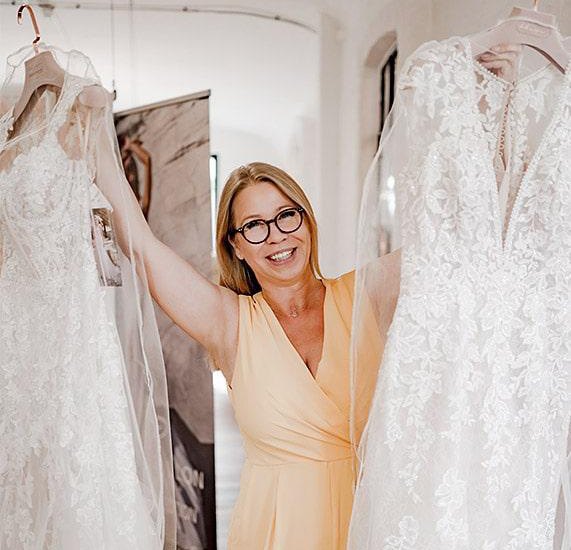 Dörte Moll of “liebenswert Brautmode” in Bargfeld-Stegen comments: “One of the most noticeable developments I’ve seen this year is the growing number of last-minute brides. Many customers now visit the boutique just a few weeks before their wedding and therefore need fast, reliable solutions. At the same time, this period is also filled with gown collections and final alterations for dresses that have already been ordered. As the owner of a small boutique where I personally manage every aspect of the business, this increase in short-notice appointments places significant demands on planning and organisation. That makes readily available stock, realistic delivery times, and straightforward communication with manufacturers more important than ever. Only with sufficient flexibility can we ensure, even under considerable time pressure, that every bride ultimately finds the right dress and feels completely confident and comfortable on her wedding day.”
 Cornelia Lange-Rupp of “Das Brautzimmer Naumburg” shares her experience: “I am seeing an increasing number of brides who visit my boutique just six to eight weeks before their wedding, or whose bodies change significantly between purchasing their gown and their fitting appointments. As a smaller, owner-operated boutique, reliable online stock portals with up-to-date inventory, short delivery times, and a dedicated contact person at the manufacturer have therefore become essential. Equally important is flexibility when a bride requires the same gown in a different size due to significant weight loss. Solutions like these enable me to continue offering personalised advice, even at short notice, and ultimately achieve what matters most: ensuring every bride feels confident, comfortable, and beautiful in her wedding dress.”
The Beauty in Speed
 Lisa Chen, CEO of Amelie Bridal, explains the company’s 3-Week Express Service for retailers: “We are seeing the bridal market become increasingly last-minute. Brides are making their purchasing decisions later, and our retail partners need flexible solutions without compromising on quality, craftsmanship, or fit. With our 3-Week Express Service, we support selected VIP partners in genuine emergency situations. This is not a standard high-volume service, but an exclusive offering designed to help retailers confidently serve last-minute brides without compromising the exceptional quality and craftsmanship our collections are known for. For us, express does not mean faster at any cost. It means professional service, well-defined processes, meticulous production, and reliability our retail partners can depend on.”
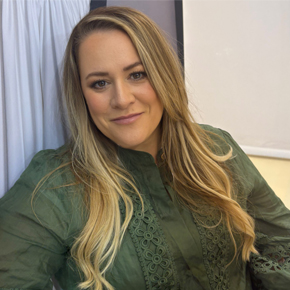 Liz Young, Chief Creative Officer & Design Director of Madi Lane Bridal Group, adds: “Our Madi Lane Bridal Group Quick Ship program is now well-established in answer to the significant demand for faster delivery options for short wear brides. We are seeing this trend increasing with the new generations of brides, who enjoy instant gratification in many areas of their lives. They expect the same from bridal. To do this, we provide a carefully hand-picked selection of our most popular wedding dresses for our Quick Ship faster delivery options. These styles can be produced and supplied to our retailers within a shorter timeframe, without any compromise to our quality or standards of craftsmanship. ”
Deliver Faster, Plan Smarter, Advise with Empathy
Brides are making their purchasing decisions later, comparing more options, and expecting both flexibility and perfection at the same time. The answer is not to make every collection immediately available or to view every last-minute bride as a logistical challenge.
Instead, the industry needs a smarter balance: clear guidance on timelines and alteration risks, strategically planned inventory, reliable Quick Ship programmes, and products that perform not only in campaign imagery but also in real life.
Because the perfect wedding dress is not created from lace, satin, or tulle alone. It is built on trust, timing, adaptability, logistics, and a boutique that knows exactly when to combine heart, expertise, and sound commercial judgement.
The bride’s wish, however, remains remarkably timeless: she simply wants to feel like herself on her wedding day. Only a little more beautiful, a little more confident, and perhaps just a touch more cinematic. The only thing that has truly changed is the speed at which the bridal industry is now expected to deliver that feeling.
By O. Larsen | Bridal Times Editorial