

Bridal consultant Katja Dürr explains why data-driven decisions, clear processes, and strategic buying are essential for building successful and profitable bridal businesses.
Katja, tell us a bit about your journey into the bridal industry and why you founded your consulting business.
I actually entered the bridal industry by taking a few detours. In 2014, I started an online shop for bridalwear as a side business. That time gave me valuable insights into the industry and sparked my passion for bridal fashion.
In 2018, I opened my own bridal boutique. What began as a small studio of around 40 square meters developed significantly over the years. We expanded to approximately 500 square meters, built a team of 18 employees, and achieved annual revenue of around €1.2 million. This period showed me how much potential the industry holds when concept, team, customer experience, and a data-driven perspective on the business come together.
I have always loved the industry. At the same time, I eventually felt the desire for more freedom and new creative opportunities. That’s why I sold my business to my former store manager, who now continues to run it successfully.
During my time as an entrepreneur, I built a strong network. Many colleagues in the industry regularly asked me for advice. I realized that while consulting services do exist, very few combine hands-on entrepreneurial experience from building a bridal business with a clear, data-driven approach. That realization ultimately led to the founding of my consulting company.
Today, I support bridal retailers in defining a clear positioning, operating in a financially stable way, and building sustainable structures.
Which topics have you specialized in within your coaching?
My coaching primarily focuses on two areas: data-driven decision-making and clear business processes.
Many decisions in bridal retail are made very emotionally. Passion is part of the industry, but long-term success comes when entrepreneurs truly understand their key figures and base their decisions on them—from purchasing and pricing to staffing.
It’s not just about revenue. Profitability is what really matters. A bridal boutique should not be an elaborate hobby, but a well-managed business that also provides a fair income.
Another key part of my work is on-site support. I visit every store to truly understand workflows, team dynamics, sales areas, and overall conditions. Only then can consulting be both individualized and practical. Today, my team and I support more than 20 bridal businesses in one-on-one coaching.
The industry is highly driven by emotion. Does the business perspective sometimes get neglected?
Yes, I see that quite often. The bridal industry thrives on emotion, special moments, and a passion for the product—that’s what makes it so unique. At the same time, this emotional focus often leads to business fundamentals being pushed into the background.
Many entrepreneurs run their businesses with great dedication but feel uncertain when it comes to key figures, reporting, or financial relationships. Even reading a standard financial report is a challenge for many.
Yet this is where enormous potential lies. Those who understand their numbers can steer their business much more precisely—whether in purchasing, pricing, or staffing. My goal is therefore to make numbers understandable and practical. They shouldn’t be an obstacle, but a tool that provides clarity and confidence.
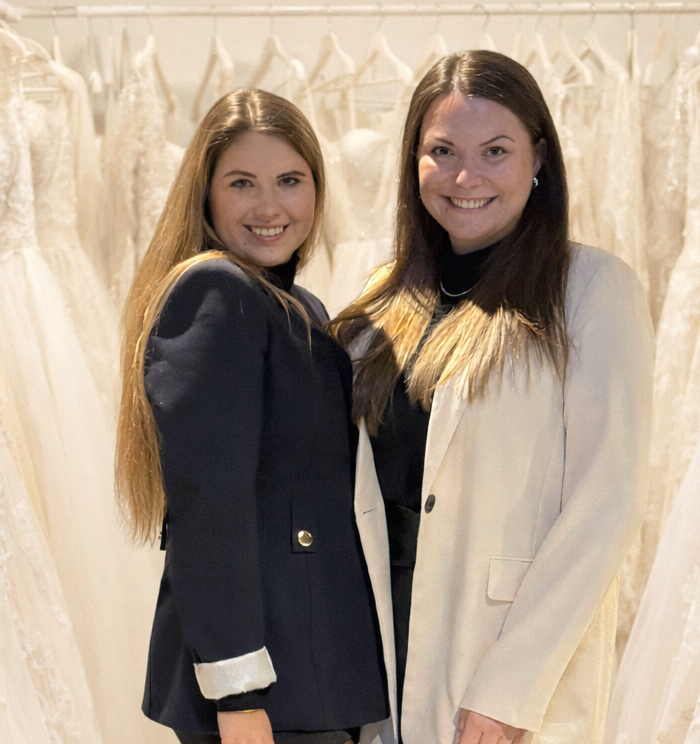
Katja Dürr und Helen Löhner von Katja Dürr Consulting
What advice would you give to businesses that feel uncertain about their numbers?
My most important advice is not to avoid the numbers, but to consciously integrate them into everyday business life. The bridal industry is a cost-intensive business. Cost of goods, staff, retail space, and marketing make it essential to understand exactly how the business is performing financially.
It’s not about complex financial models at the beginning, but about developing a clear feel for the most important KPIs: revenue development, average transaction value, margins, and inventory levels. Those who regularly review these figures quickly gain confidence and can make more informed decisions.
Many entrepreneurs find that their initial uncertainty disappears quickly once they start actively working with their numbers.
In your experience, where do bridal businesses most often lose money?
Primarily in two areas: stock and team structures.
Stock is one of the biggest investments in a bridal business. Problems often arise when margins are too low, pricing is not set up strategically, or initial orders are too large. When collections are bought too broadly and certain styles don’t sell, a significant amount of capital gets tied up in dresses hanging in the store.
The second area is inefficient team processes. In many boutiques, workflows have developed over time without clear structure. This often leads to more staff being scheduled than actually needed.
My approach is always: work smart, not hard. When buying, pricing, and internal processes are aligned, businesses can achieve much greater financial stability—without compromising the customer experience.
Trade show season is currently underway. How can retailers buy strategically?
Trade shows are one of the most important times of the year, yet decisions are often made very emotionally.
That’s why preparation is key. A clearly defined purchasing budget is the first step. Equally important is strategically allocating that budget to designers or brands that have proven successful and are regularly reordered.
It’s just as important to have a clear picture of your target customer. Those who know exactly which bride they want to serve can buy much more precisely.
Another key piece of advice: take your time when making decisions. At trade shows, there’s often pressure to place orders immediately. It’s often worth sleeping on it and asking yourself: Does this dress truly fit my store and my brides?
Ultimately, strategic buying means balancing emotion with sound business thinking.
What should bridal retailers focus on today to remain profitable in the long term?
Three points are particularly important.
The first is generational change. With Gen Z, a new customer group is emerging with different expectations regarding communication, brands, and the shopping experience. Retailers need to understand how these customers think and buy.
The second point is economic development. Costs are rising across many areas, making it increasingly important to regularly review and adjust pricing structures.
The third point is the personal development of business owners. The industry is evolving—and so are the requirements for leadership, marketing, and strategy.
If you could give just one piece of advice, what would it be?
As an entrepreneur, you don’t have to know everything yourself. But you should know where to get support.
Many bridal businesses are run with great passion. At the same time, topics like KPIs, pricing, and strategic planning are not automatically strengths for every entrepreneur—and that’s completely normal. What matters is the willingness to engage with these topics and to seek support when needed.
In the long run, the most successful businesses are those that combine both: the emotional side of the bridal industry and a clear economic strategy. That’s how you build a business that not only brings joy, but is also sustainably profitable.
We thank Katja for this interview.
If you would like to learn more about how Katja Dürr can support your bridal business in the German language, please contact: Katja Dürr Consulting